Hanging Basket Wall: Vertical Porch Garden Design Guide

VC2606007

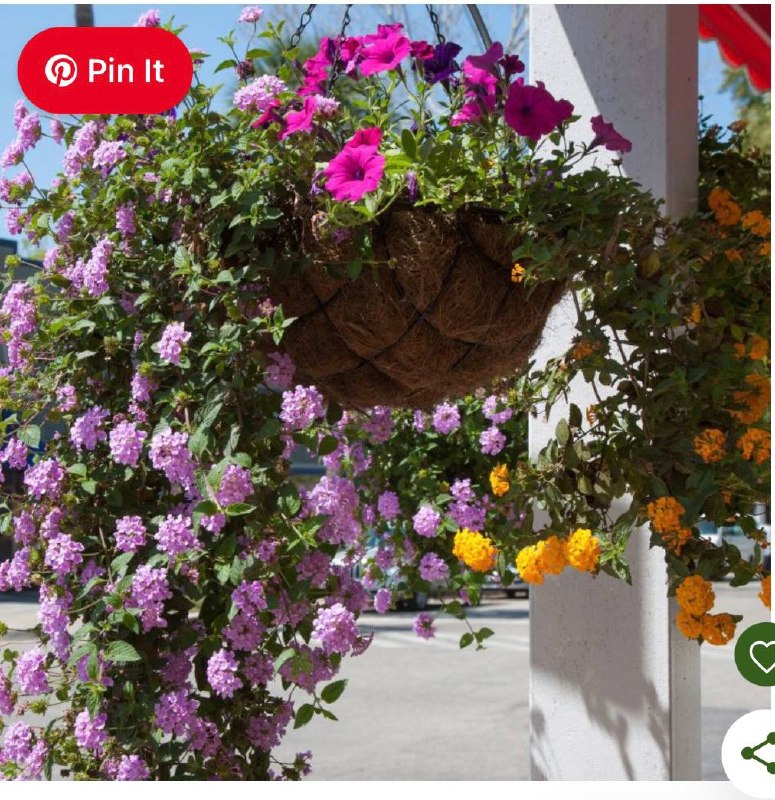
Lush hanging basket overflowing with fuchsia, lantana and purple petunias against blue sky

1 Design Story

A hanging basket wall transforms a blank porch wall into a living tapestry of color and texture. By staggering baskets at different heights and choosing plants with complementary bloom colors, you create a vertical garden that draws the eye upward and makes even a small porch feel lush and inviting.

Detail view of the planter composition — leaf textures up close Side-view layer sketch — planter height structure

This approach is ideal for porches with limited floor space, for homeowners who want dramatic visual impact without sacrificing walking room, and for anyone who loves the romantic look of cascading flowers. A hanging basket wall is essentially a curtain of blooms — and it changes throughout the season as different plants hit their peak.

2 The Structure — Why This Works

The secret to a successful hanging basket wall is height staggering and color harmony. Space baskets so they don't visually overlap at eye level, and choose a cohesive color palette rather than competing shades. Think of each basket as a brushstroke in a larger painting.

Fuchsia provides the dramatic focal point with pendant hot pink and deep purple blooms that demand attention at the top. Calibrachoa fills the middle with masses of small purple flowers that create a solid color block. Bacopa spills pure white from the lower baskets, brightening the arrangement. Boston Fern adds textural contrast and lush green volume at the bottom.

3 Plant Selection

Fuchsia Lady Boothby hanging basket

Fuchsia 'Lady Boothby'

Role: Dramatic Focal Point

Pendant hot pink and deep purple double flowers that resemble dancing ballerinas. Blooms continuously from June to frost. Attracts hummingbirds. Prefers partial shade.

Bacopa Snowflake white trailing flowers

Bacopa 'Snowflake'

Role: White Waterfall Accent

Trailing stems covered in masses of pure white five-petaled flowers. Self-cleaning (no deadheading needed). Blooms spring through fall. Tolerates some shade.

Calibrachoa Cabaret Purple million bells

Calibrachoa 'Cabaret Purple'

Role: Color Fill & Mass

Small petunia-like purple flowers with dark throats that cover the entire plant. Trailing habit, extremely floriferous. Self-cleaning. Needs full sun for best bloom.

Boston Fern Nephrolepis exaltata

Boston Fern

Role: Lush Green Anchor

Archiving bright green fronds with small leaflets that create a feathery, airy texture. Excellent in low light. Adds weight and fullness at the bottom of the arrangement.

4 Care & Maintenance

  1. Water hanging baskets daily in summer — they dry out much faster than ground-level pots. On hot days, check twice. Water until it runs out the bottom.
  2. Fertilize weekly with a bloom-boosting liquid fertilizer (high phosphorus) diluted to half strength. Hanging baskets are heavy feeders due to their limited soil volume.
  3. Deadhead fuchsia by pinching off spent flowers and seed pods. Calibrachoa and bacopa are self-cleaning and don't need deadheading.
  4. Rotate baskets weekly so all sides get equal light and plants grow evenly around the basket.

5 Design Tips

  1. Use coconut coir or moss-lined wire baskets instead of plastic — they allow better airflow to roots and look more natural.
  2. Install a drip tray system or choose plants above a non-wooden surface to prevent water stains on the porch floor.
  3. Stagger hook heights so baskets don't overlap visually. A good rule: 8-10 inches vertical spacing between hooks.
  4. Use moisture-retaining potting mix and consider water-absorbing crystals to reduce daily watering frequency.

6 Common Mistakes

  1. Hanging baskets too close together — they'll tangle in the wind and compete for light. Give each basket at least 12 inches of horizontal clearance.
  2. Using too-small baskets — a 12-inch basket is the minimum for most plants. Smaller baskets dry out hourly on hot days.
  3. Forgetting that hanging baskets need more water — they can dry out completely in half a day in summer. Check morning and evening.
  4. Choosing all sun-lovers for a shaded porch — fuchsia and fern do fine in shade, but calibrachoa and bacopa need more light to bloom heavily.

7 Real vs. Faux: What to Buy

Fuchsia Real The intricate pendant flowers with their unique shape and bi-color petals are impossible to replicate well in faux form. Plus real fuchsia attracts hummingbirds.
Bacopa Real Bacopa is a prolific bloomer that's cheap and easy to grow. Faux bacopa flowers look plastic, and the continuous real blooms are worth the minimal care.
Calibrachoa Real Self-cleaning and incredibly floriferous — real calibrachoa produces hundreds of blooms without any deadheading. Faux versions can't match the sheer abundance.
Boston Fern Faux (hard-to-reach) / Real (accessible) Real Boston ferns are beautiful but need daily misting in dry climates and drop leaflets everywhere. For hard-to-reach high hooks, a high-quality faux fern is practical.

FAQ

How do I water hanging baskets without making a mess?

Use a watering wand with a long reach so you can water in place. Let the excess drip into a tray or move baskets to a spot where drips won't stain the porch floor.

How many hooks do I need for a basket wall?

Space hooks at least 12 inches apart horizontally and 10-12 inches apart vertically. This prevents baskets from tangling and gives each plant room to grow.

Can I hang baskets on a covered porch with low light?

Yes, but choose shade-loving plants. Fuchsia and Boston fern do well in low light. Bacopa and calibrachoa need more sun to bloom heavily.

How often should I replace hanging basket plants?

Most hanging basket annuals last one season (spring to frost). Replace them yearly. Boston fern can be overwintered indoors in a bright room.